
Published: August 18, 2026
Overview
Pakistan's political landscape is currently experiencing a high-stakes convergence of intense judicial hearings, major regional defense shifts, and grassroots economic agitation. From legal battles concerning jailed leadership to landmark international pacts, political developments continue to grip Islamabad and provincial capitals alike.
Supreme Court Directs Hospital Transfer Amid Health Concerns
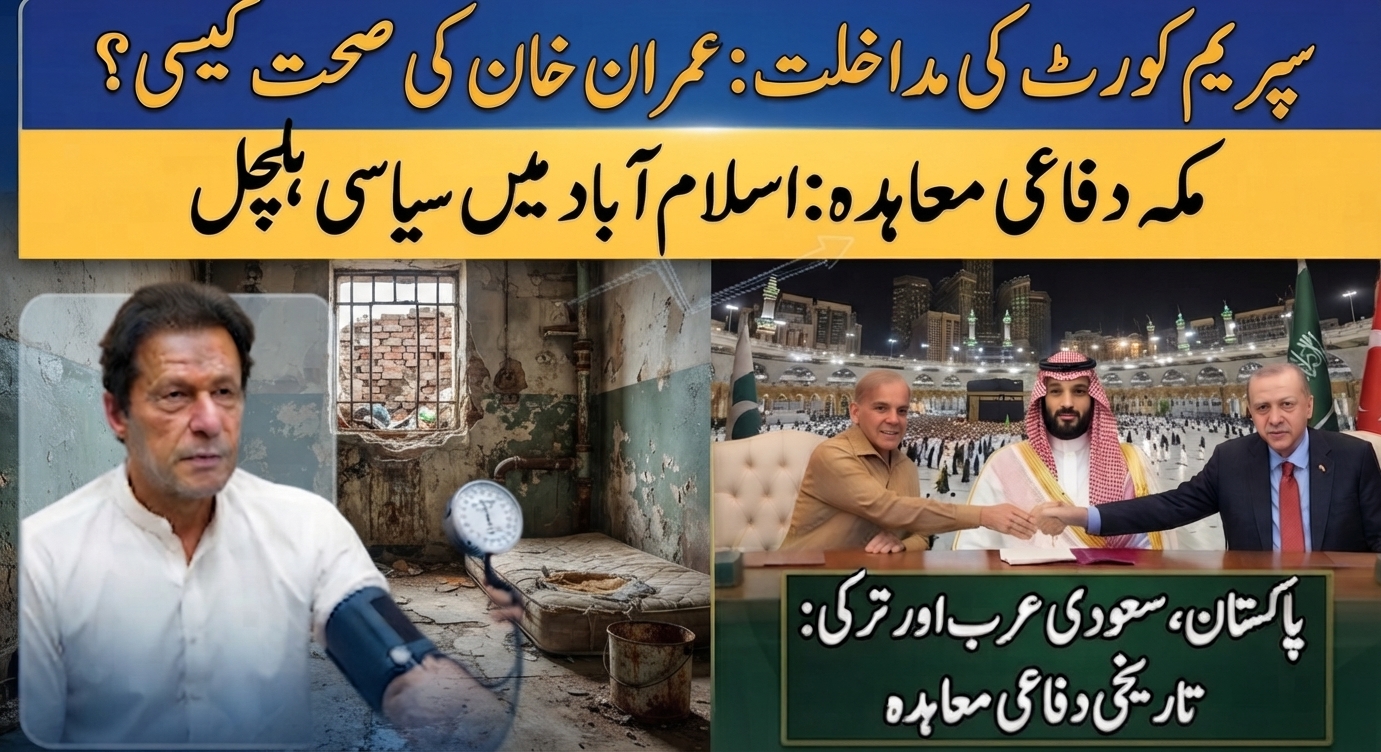
In a major development today, the Supreme Court of Pakistan ordered the temporary transfer of jailed former Prime Minister Imran Khan to a hospital following rising concerns over his health parameters and blood pressure.
The directive comes in response to persistent petitions filed by Pakistan Tehreek-e-Insaf (PTI) leadership demanding unhindered medical access and family meetings. While state reports submitted to the apex court noted that the PTI founder has maintained stable metrics—including statements regarding his vision—the court's intervention aims to defuse escalating political tensions surrounding his detention conditions. Party leaders have maintained pressure, urging authorities to ensure transparent updates regarding his well-being.
The Makkah Joint Defence Agreement Shakes Up Regional Diplomacy
On the foreign policy front, the historic Makkah Joint Defence Agreement—forged between Pakistan, Saudi Arabia, and Türkiye—continues to dominate domestic political discourse and international headlines.
The pact has drawn widespread political and academic commentary across Pakistan, with government officials lauding it as a strategic milestone that elevates the nation's diplomatic standing. Prime Minister Shehbaz Sharif recently welcomed international support for the agreement, while defense analysts view the tripartite security framework as a transformative shift in regional defense alignments.
Meanwhile, Pakistan has officially assumed the presidency of the United Nations Conference on Disarmament, placing Islamabad at the center of international deliberations on global arms control and security.
Economic Pressures Spur Nationwide Sit-Ins
Domestically, inflation and fiscal policy continue to test public patience. Jamaat-e-Islami (JI) and other political groups have staged nationwide sit-ins and protests targeting soaring fuel prices, high electricity tariffs, and heavy taxation.
In response to mounting administrative hurdles and governance bottlenecks, Prime Minister Shehbaz Sharif has issued strict warnings and rebukes to federal and provincial bureaucrats, demanding visible improvements in public service delivery and accountability. Parliamentary panels are also reviewing sweeping price-control measures across key commodities to ease the financial squeeze on citizens.
What's Next?
As political parties position themselves around upcoming legislative agendas and judicial proceedings, the dialogue between the government and the opposition remains fractured. Observers will closely monitor how the implementation of the Makkah defense framework unfolds alongside domestic economic management in the weeks ahead.


No comments yet. Be the first to comment!