

Matric is the first public examination most Pakistani students sit, and the first time a single number decides which college doors open. This guide covers checking the SSC result for any board in the country, and — more usefully — what the numbers on the marks sheet actually mean once you have them.
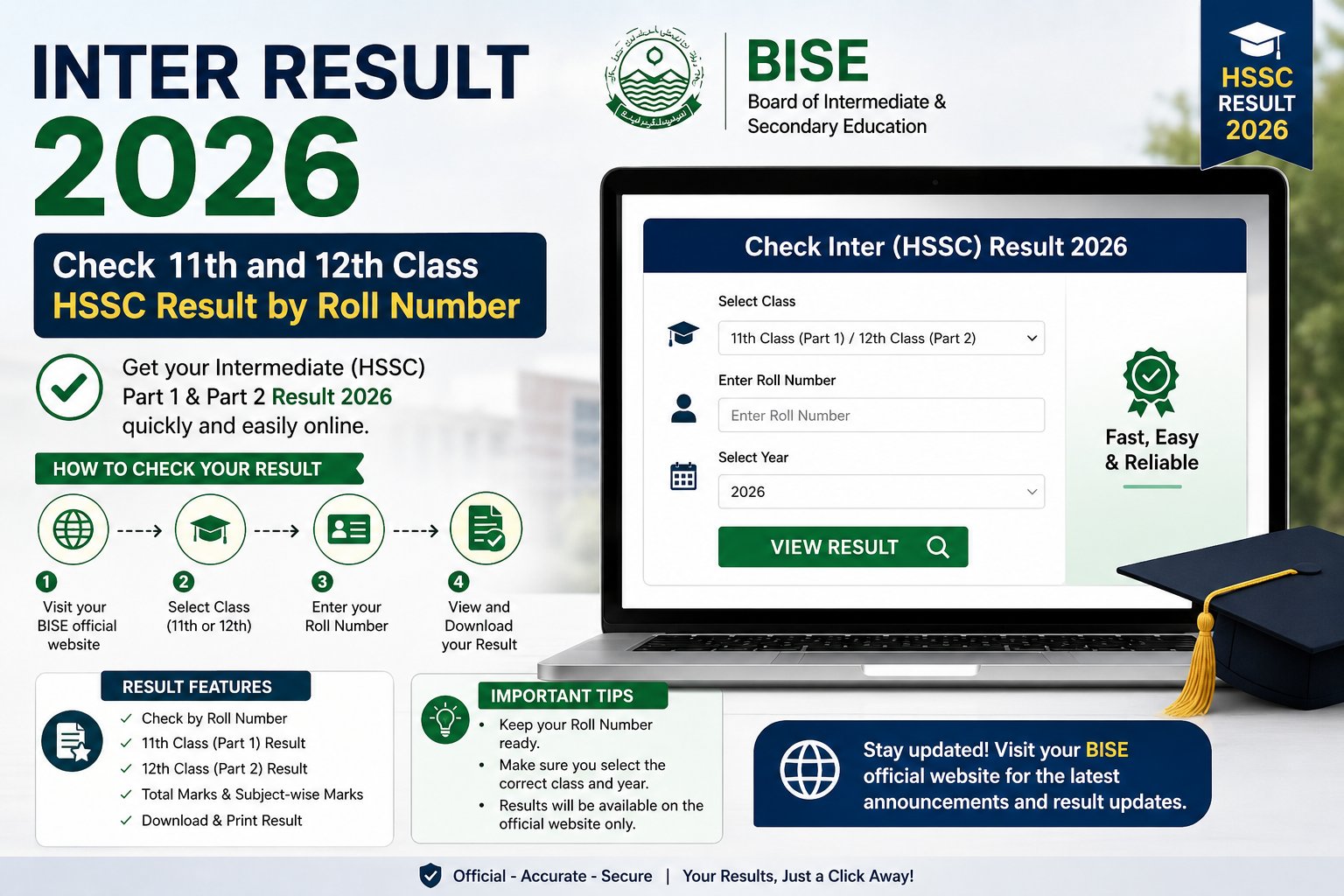
Checking your Matric result 2026
Every board supports lookup by roll number, and it is the only method guaranteed to work everywhere:
- Open your board's hub page from the list at the end of this article.
- Enter your roll number in the checker and select Matric (SSC-II / 10th), or 9th Class (SSC-I) if you are looking for Part I.
- You are taken to the official board result page, where your subject-wise marks sheet loads.
- Download or screenshot it immediately. Portals slow to a crawl in the hour after an announcement.
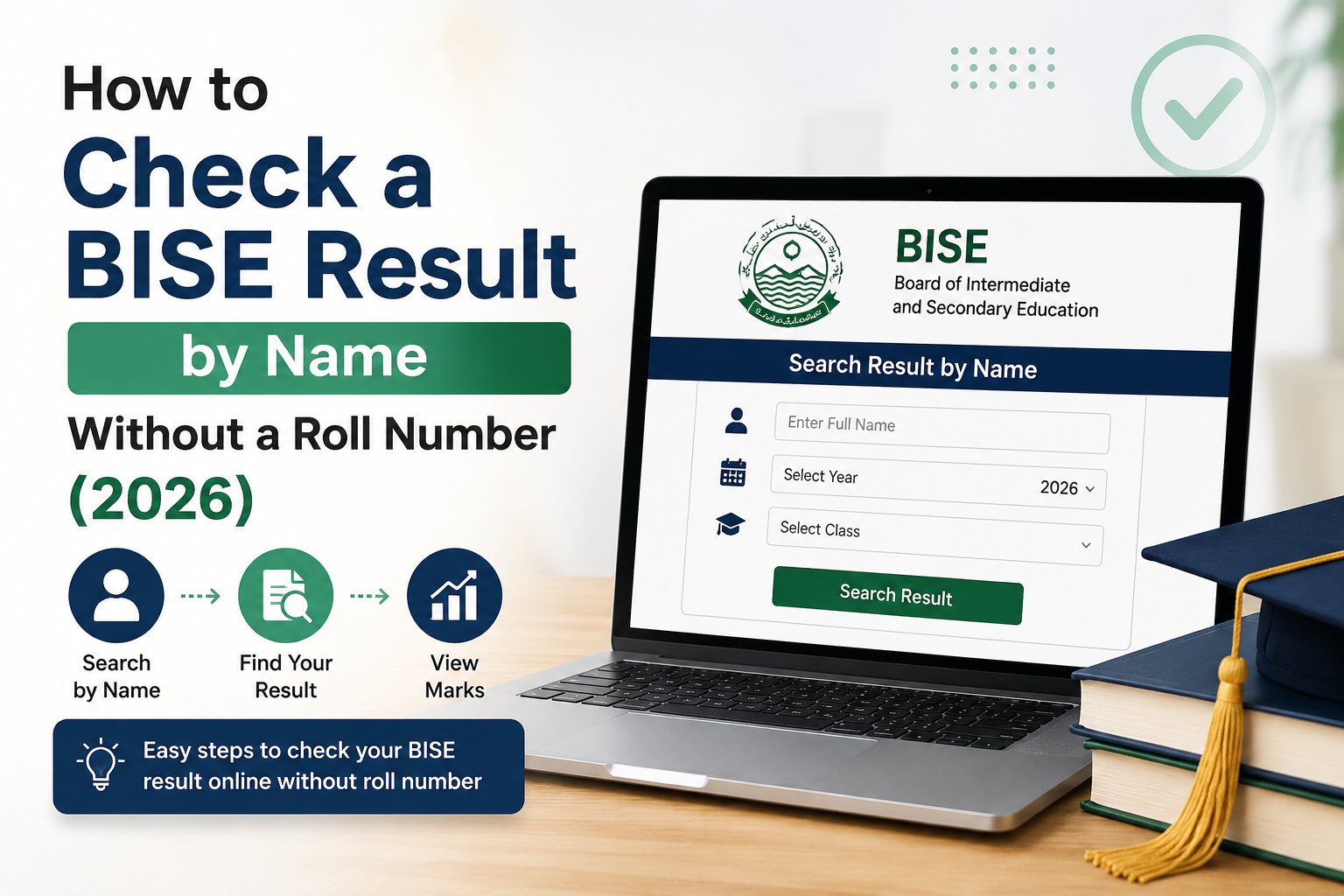
No roll number? The result gazette is a searchable PDF of every candidate, and our guide to checking a result by name without a roll number walks through it step by step.
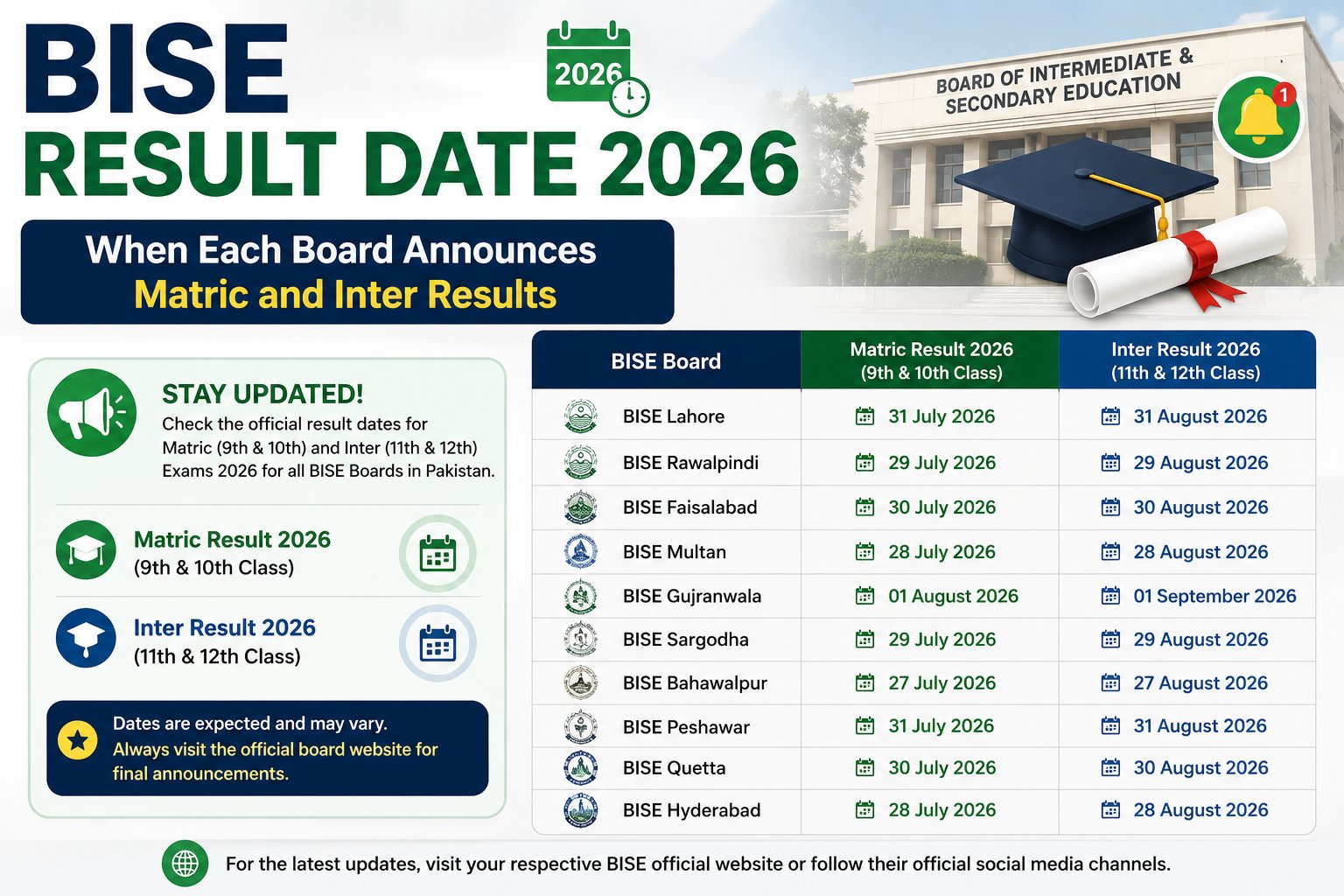
When Matric results are announced
SSC results are normally declared between July and August, about three to four months after the annual papers in March and April. Boards within a province tend to announce within days of each other. The exact date comes as a press notification on the board's own website shortly beforehand — our BISE result date guide explains how to tell an official notification from the screenshots that circulate every season.
How Matric marks are structured
Matric is marked out of 1100 marks total across both parts, with 550 for SSC Part I (9th class) and 550 for Part II (10th class). Your final Matric result combines both. The pass mark is 33 per cent, and it applies to each individual subject as well as to the aggregate — which is the rule that surprises students who passed comfortably overall but failed one paper.
Practical marks are reported separately from theory in science subjects, and both count toward the subject total. A strong practical score can carry a weak theory paper across the line, and often does.
Grade, division and percentage are three different things
This is the single most common confusion on result day. Your percentage is your marks divided by the total. Your grade and your division are then read off two different scales:
- A1 — 80% and above | A — 70–79% | B — 60–69%
- C — 50–59% | D — 40–49% | E — 33–39% | F — below 33%
- 1st division — 60% and above | 2nd division — 45–59% | 3rd division — 33–44%
So a student on 62 per cent has a B grade and a 1st division. Both are correct; they answer different questions, and college forms ask for different ones. The Marks Percentage Calculator returns all three from a marks total, and our explainer on how percentage, grades and divisions are calculated covers the edge cases — particularly subjects with different totals, where averaging two percentages gives the wrong answer.
What your Matric result decides
Intermediate admission in Pakistan runs on merit lists built from the Matric percentage, so the figure matters more than the grade letter. Broadly: pre-medical and pre-engineering programmes at well-regarded colleges tend to close in the high 70s and above, ICS and I.Com sit lower, and FA lower again — but merit varies enormously by city and by institution, and a percentage that misses a first-choice college comfortably clears a good second choice.
Apply to more than one college. Merit lists move as students accept places elsewhere, and second and third lists routinely admit candidates who missed the first.
If the result is disappointing
Re-checking is a re-totalling exercise. The board confirms that every question was marked and that the marks were added correctly — it does not re-assess your answers or change an examiner's judgement. It recovers marks lost to an addition error or a question the examiner skipped, which is more common than students assume. Apply within the deadline on the result notification, usually 15 to 30 days, and pay the per-paper fee.
Before you pay, do the arithmetic: work out how many marks separate you from the next band. Re-checking rarely finds thirty marks. For a gap of five or ten, it is frequently worth it.
Supplementary examinations cover failed subjects. Passing the aggregate while failing one paper means sitting that paper again in the supplementary session, held a few months later — not repeating the year. Registration windows are short, so decide early.
Check your board's Matric result
- Sindh — Sukkur, Hyderabad, Larkana, Mirpurkhas, Karachi
- Punjab — Lahore, Sargodha, Rawalpindi, Multan, Faisalabad, Sahiwal, Gujranwala, Bahawalpur, DG Khan
- Khyber Pakhtunkhwa — Peshawar, Swat, Mardan, Bannu, Malakand, Abbottabad
- All 23 boards — including Federal, Quetta and Aga Khan

1 Comments
Leave a Reply