

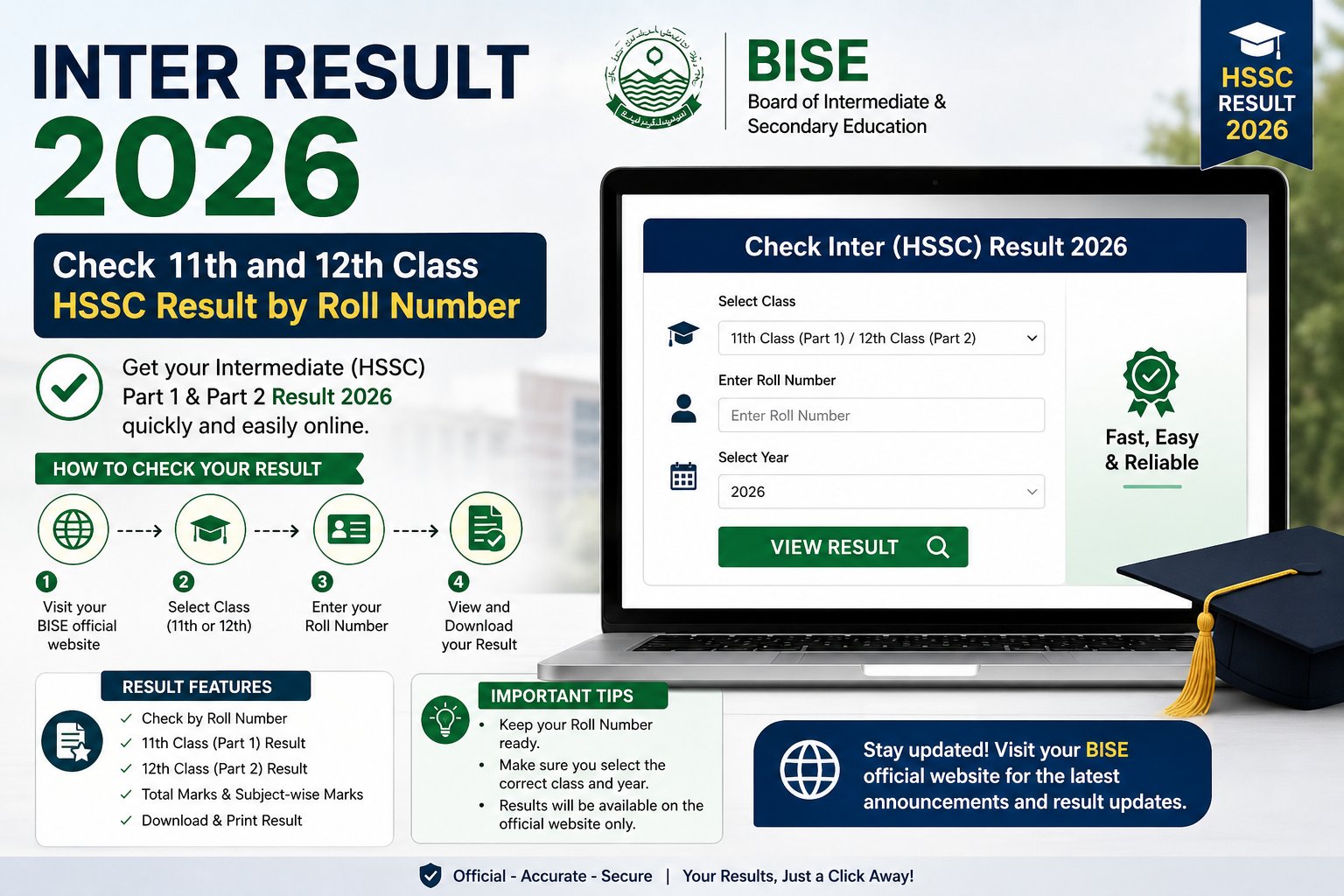
The Intermediate result carries more weight than any other school examination in Pakistan. University admission, MDCAT and ECAT eligibility, and every merit list you will appear on are built on this number. Here is how to check it on any board, and how to read it once it loads.
Checking your Inter result 2026
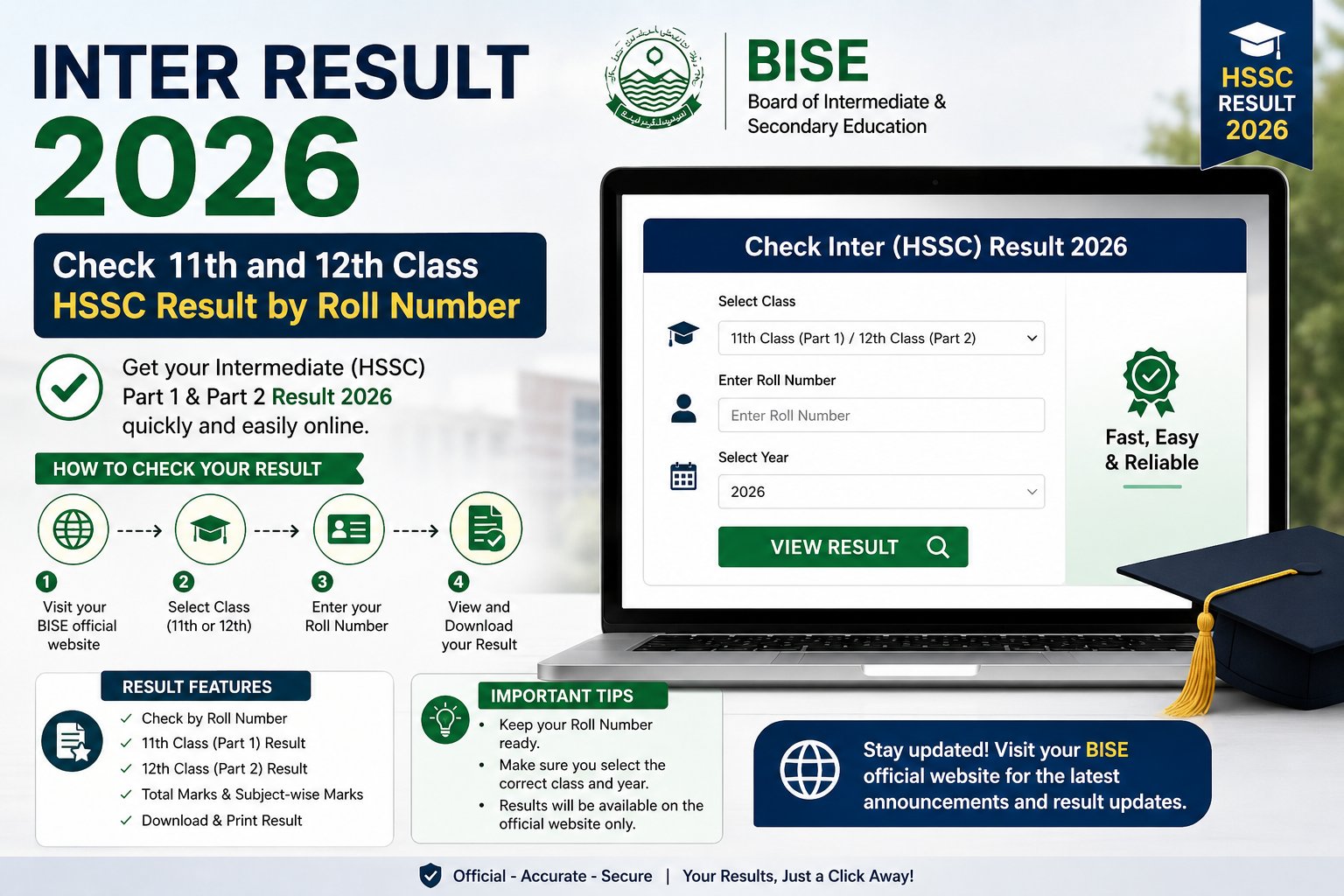
- Open your board's hub page from the list at the end of this article.
- Enter your roll number and choose your class — 1st Year (HSSC-I / 11th) or 2nd Year (HSSC-II / 12th) — or your group directly: FSc, FA, ICS or I.Com.
- The official board result page opens with your subject-wise marks sheet.
- Download it straight away. You will need it for university applications within days.
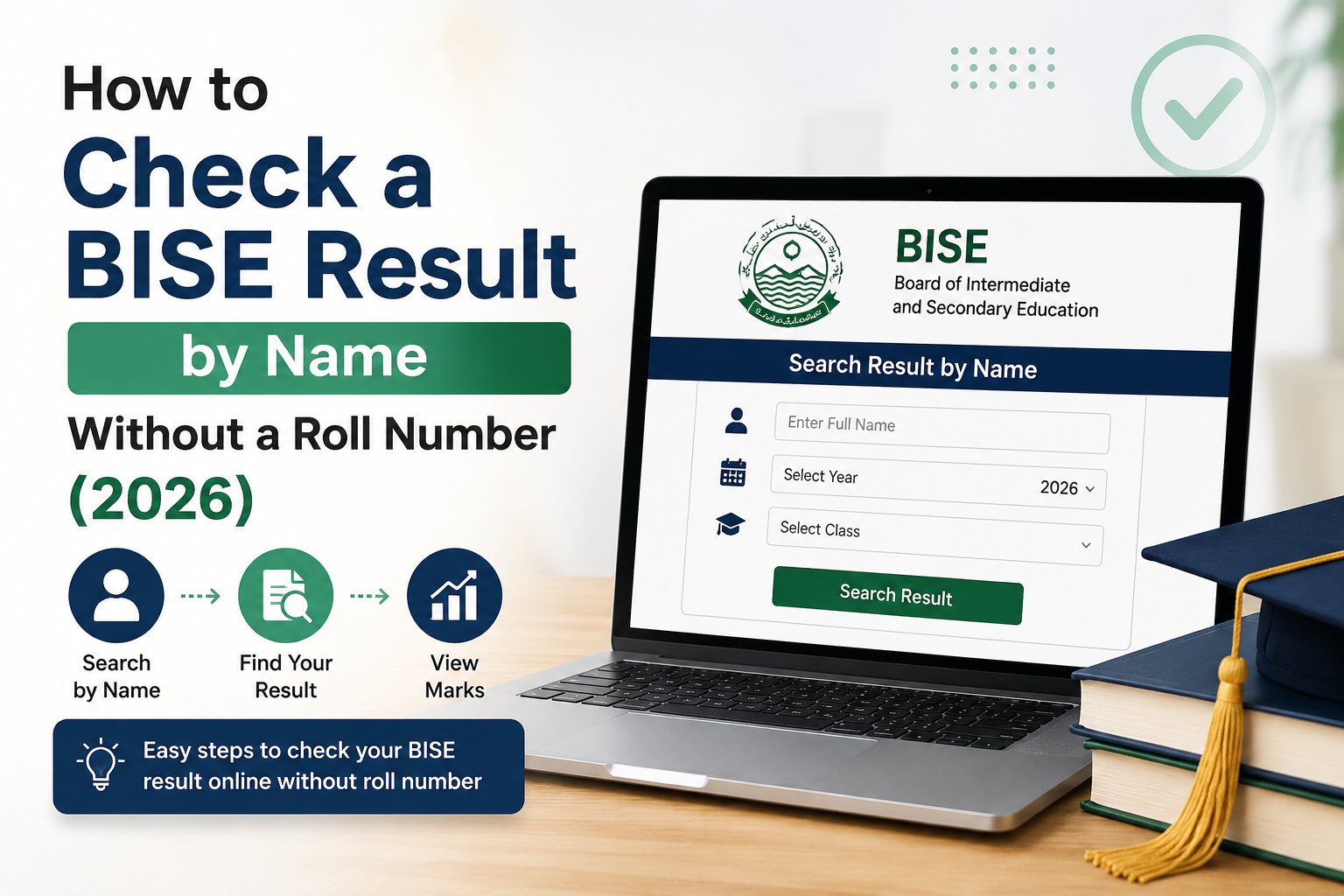
Lost your roll number slip? The gazette is searchable by name, and our guide to checking a result by name without a roll number covers the method.
When Inter results are announced
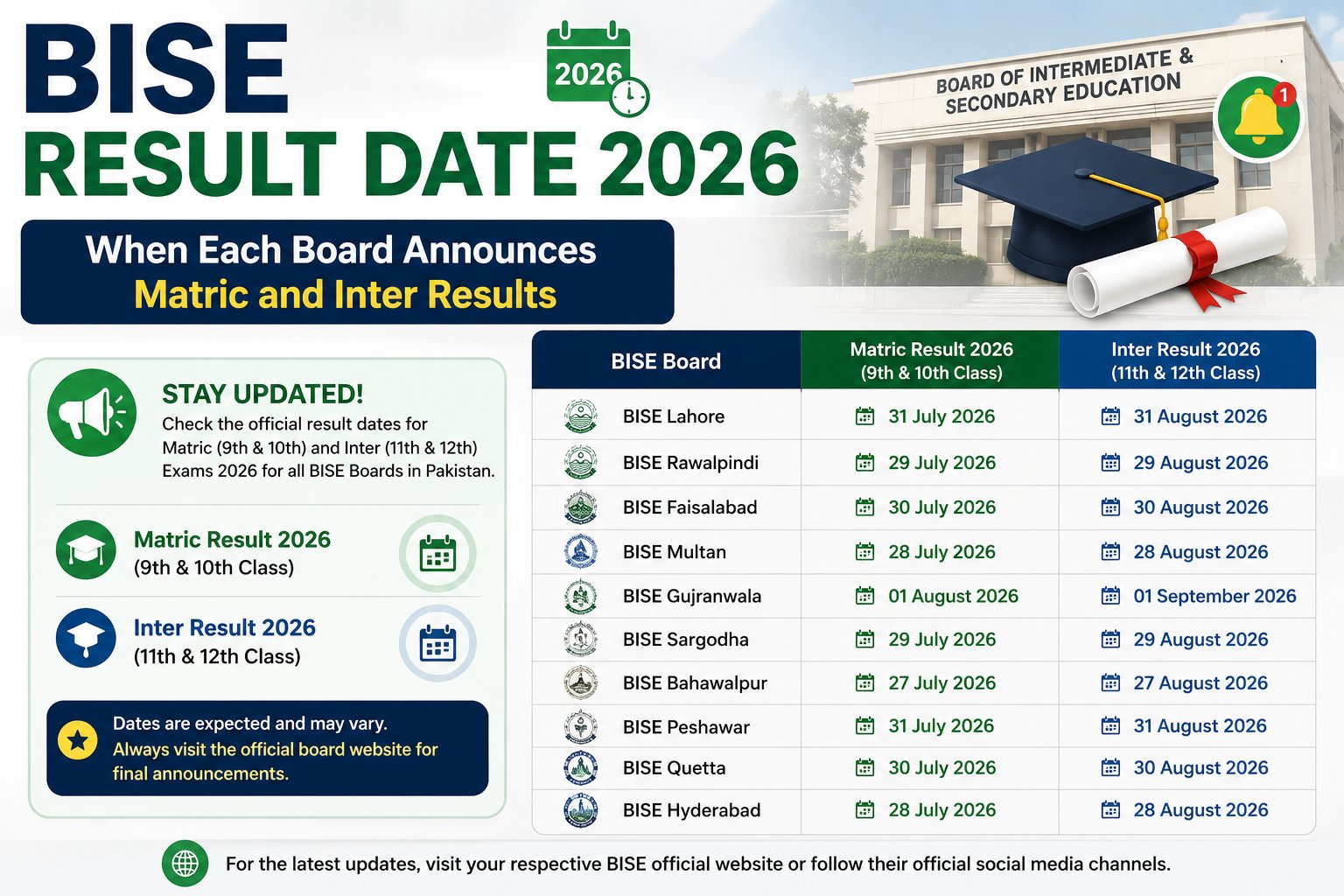
HSSC results normally arrive between August and September, after annual papers in April and May, and typically a few weeks behind the Matric announcement. Second year results usually precede first year. Boards publish the exact date in a press notification on their own website — see our BISE result date guide for how to verify one.
How Intermediate marks work
Intermediate is marked out of 1100 total, split as 550 for HSSC Part I (11th) and 550 for Part II (12th). Science groups carry practical marks alongside theory in each science subject, and both count. The pass mark is 33 per cent, applied per subject as well as to the aggregate.
Group matters as much as the total. FSc pre-medical, FSc pre-engineering, ICS and I.Com lead to different degree programmes, and a strong result in the wrong group does not open the door to a programme that requires specific subjects. Check the eligibility requirements of the degree you want before assuming a percentage is sufficient.
Grade, division and percentage
- Grades — A1 from 80%, A 70–79%, B 60–69%, C 50–59%, D 40–49%, E 33–39%, F below 33%.
- Divisions — 1st from 60%, 2nd from 45%, 3rd from 33%.
The two scales overlap without matching, which is why 62 per cent is simultaneously a B grade and a 1st division. University forms and merit lists usually want the percentage. The Marks Percentage Calculator produces all three, and our guide to how percentage, grades and divisions are calculated explains which figure each kind of form is asking for.
What comes after Inter
For medical and dental programmes, the Intermediate percentage is combined with the MDCAT score in a weighted aggregate — so a strong Inter result reduces how much the entry test has to carry, and vice versa. Engineering admissions work the same way with ECAT or the university's own test. For general degree programmes, the Inter percentage frequently stands alone.
That aggregate is the number merit lists are actually built on, and it is rarely the number students expect: under the common medical formula Matric carries 10 per cent, FSc 40 per cent and the MDCAT 50 per cent, so the entry test moves your position far more than anything on your result card. The Merit Calculator works it out for MDCAT, ECAT and NUST NET, or for any custom weighting printed in a prospectus, and shows which component is costing you the most.
One thing worth knowing early: university marks work on a completely different scale. Undergraduate programmes report on the HEC 4.0 grade point system, not percentages, and a strong Intermediate percentage does not automatically translate into a strong CGPA. Our guide on how to calculate CGPA in Pakistan covers that scale, and the CGPA Calculator handles the credit-hour weighting once you get there.
Re-checking and supplementary
Given what rides on the Inter percentage, re-checking is worth more consideration here than at any other level. It is a re-totalling exercise — the board verifies every question was marked and the marks were added correctly — not a fresh assessment. Work out how many marks separate you from the next band before applying, and note that the deadline is short, usually 15 to 30 days from the announcement.
Supplementary examinations cover failed subjects and are held a few months after the annual result. Clearing a subject in supplementary keeps a university application alive for the same admission cycle in many cases, though not all — check the specific programme's deadline before assuming it does.
Check your board's Inter result
- Sindh — Sukkur, Hyderabad, Larkana, Mirpurkhas, Karachi
- Punjab — Lahore, Sargodha, Rawalpindi, Multan, Faisalabad, Sahiwal
- Khyber Pakhtunkhwa — Peshawar, Swat, Mardan, Bannu, Malakand
- All boards, including Federal (FBISE) and Aga Khan
No comments yet. Be the first to comment!